

Estimated Reading Time: 7 minutes
Clear communication plays a major role in academics, careers, and personal relationships. Many individuals understand concepts well but hesitate when expressing them aloud. This hesitation often comes from lack of structured practice and confidence. The process of improving speaking skill starts with awareness, daily effort, and the right learning tools. Even short, focused sessions every day can create noticeable progress within weeks. The goal is not perfection but steady improvement that makes conversations natural and confident. With patience and consistent practice, anyone can develop clarity, stronger vocabulary, and better delivery in both casual and professional environments.
Table of Contents
- 1. Practice Daily
- 2. Vocabulary Building
- 3. Active Listening
- 4. Public Speaking
- 5. Visualization
- 6. Body Language
- 7. Clarity and Pace
- 8. Feedback
- 9. Topics of Interest
- 10. Anxiety Control
- 11. Audience Engagement
1. Practice Daily for Improving Speaking Skill
Daily speaking practice strengthens pronunciation, fluency, and confidence. Reading aloud, narrating daily activities, or recording short audio clips trains both the mind and tongue. This routine plays a vital role in improving speaking skill because repetition builds familiarity with sentence flow. Even ten minutes of structured speaking every day produces long-term improvement. Over time, hesitation reduces and clarity increases, making communication smoother in real conversations.
2. Vocabulary Building
Learning a few new words daily enhances expression and reduces pauses while speaking. Maintaining a word journal or using language tools encourages retention. A stronger vocabulary contributes directly to improving speaking skill because it allows flexible sentence construction and clearer explanations. When individuals know multiple ways to express the same idea, confidence naturally grows.
3. Active Listening
Listening to skilled speakers through podcasts or interviews exposes learners to tone, rhythm, and pronunciation styles. This habit accelerates improving speaking skill because observing effective communication patterns helps refine personal delivery. Active listening turns passive hearing into meaningful learning and improves conversational timing.
4. Public Speaking
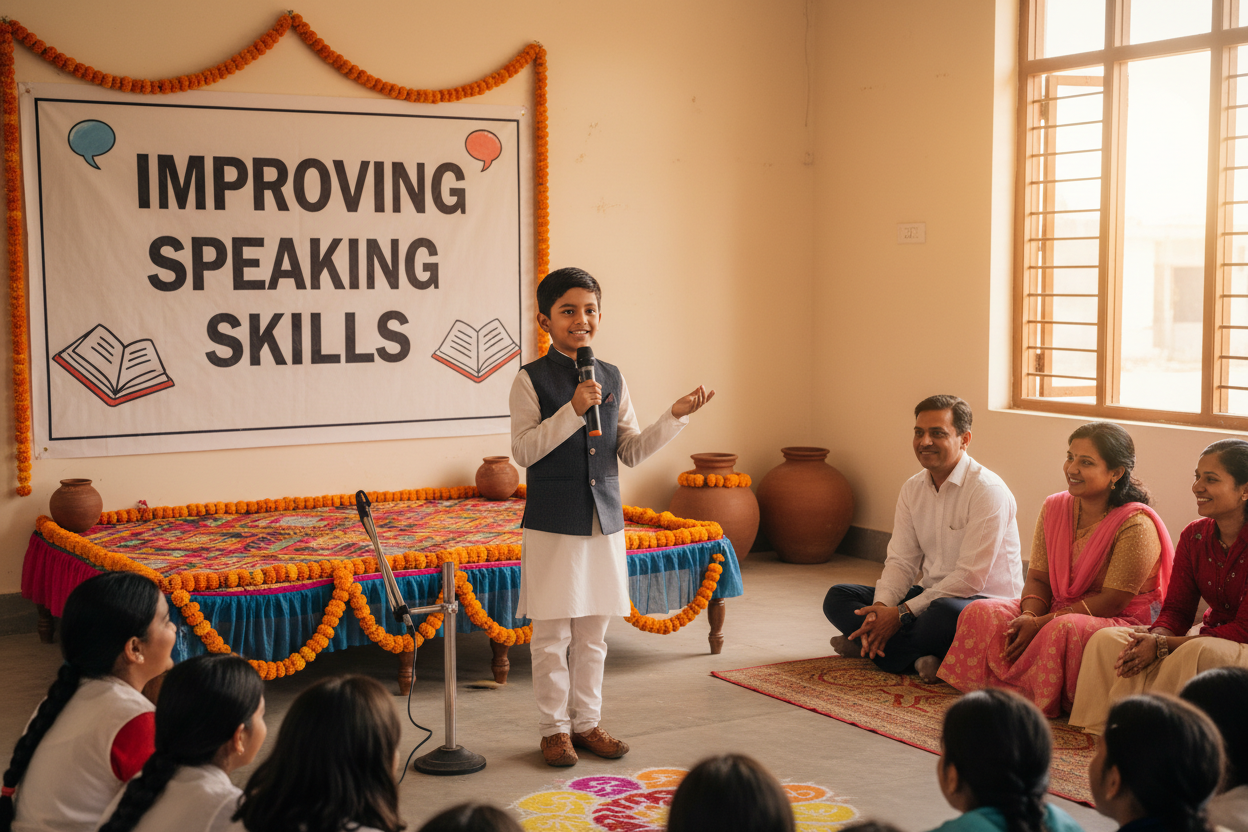
Participating in discussions, seminars, or presentations builds courage and organization of thoughts. Public speaking activities significantly assist improving speaking skill by training the mind to remain calm under pressure. Gradual exposure reduces fear and increases confidence, leading to clearer and more authoritative speech.
5. Visualization
Mental rehearsal prepares individuals before actual communication. Imagining successful interactions and confident posture strengthens belief and reduces nervousness. Visualization supports improving speaking skill by conditioning the brain for positive outcomes and smoother delivery.
6. Body Language
Non-verbal cues such as eye contact, gestures, and posture influence how messages are perceived. Mastering body language accelerates improving speaking skill because audiences respond positively to confident presence. Practicing in front of a mirror or camera helps align expressions with words.
7. Clarity and Pace
Balanced speaking speed improves understanding and engagement. Exercises like tongue twisters and paced reading enhance articulation. Maintaining clarity plays an important role in improving speaking skill because listeners grasp ideas easily without repetition, building credibility and confidence.
8. Feedback
Constructive criticism from mentors or peers highlights improvement areas. Seeking regular feedback contributes to improving speaking skill since corrections can be applied immediately. Recording and reviewing sessions encourages self-analysis and steady growth.
9. Topics of Interest
Discussing familiar and enjoyable subjects increases enthusiasm and reduces fear. Passion supports improving speaking skill because speakers focus on sharing ideas rather than worrying about mistakes. This positive experience motivates consistent practice.
10. Anxiety Control
Breathing exercises, affirmations, and preparation reduce nervousness before speaking. Emotional control is essential for improving speaking skill because calmness allows clearer thinking and smoother delivery in interviews or presentations.
11. Audience Engagement
Interaction transforms speeches into conversations. Asking questions and observing reactions strengthens improving speaking skill by building adaptability and confidence. When speakers focus on connection rather than perfection, communication becomes natural and persuasive.
Ready to build confidence and communicate better? Try SpeakGenie today.
Frequently Asked Questions
What is the fastest way to improve communication?
Daily practice, listening to skilled speakers, and using structured learning platforms help accelerate progress. These methods collectively strengthen clarity and confidence.
Can technology really help in speaking improvement?
Yes. Digital platforms provide guided exercises, feedback tools, and vocabulary training that make learning consistent and measurable.
How does confidence affect communication?
Confidence reduces hesitation and allows smoother delivery. When speakers feel prepared, they express ideas more clearly and engage audiences effectively.
Where can I learn more about improving my speaking abilities?
You can explore additional resources and guided exercises by visiting SpeakGenie, which offers structured tools for learners at all levels.