

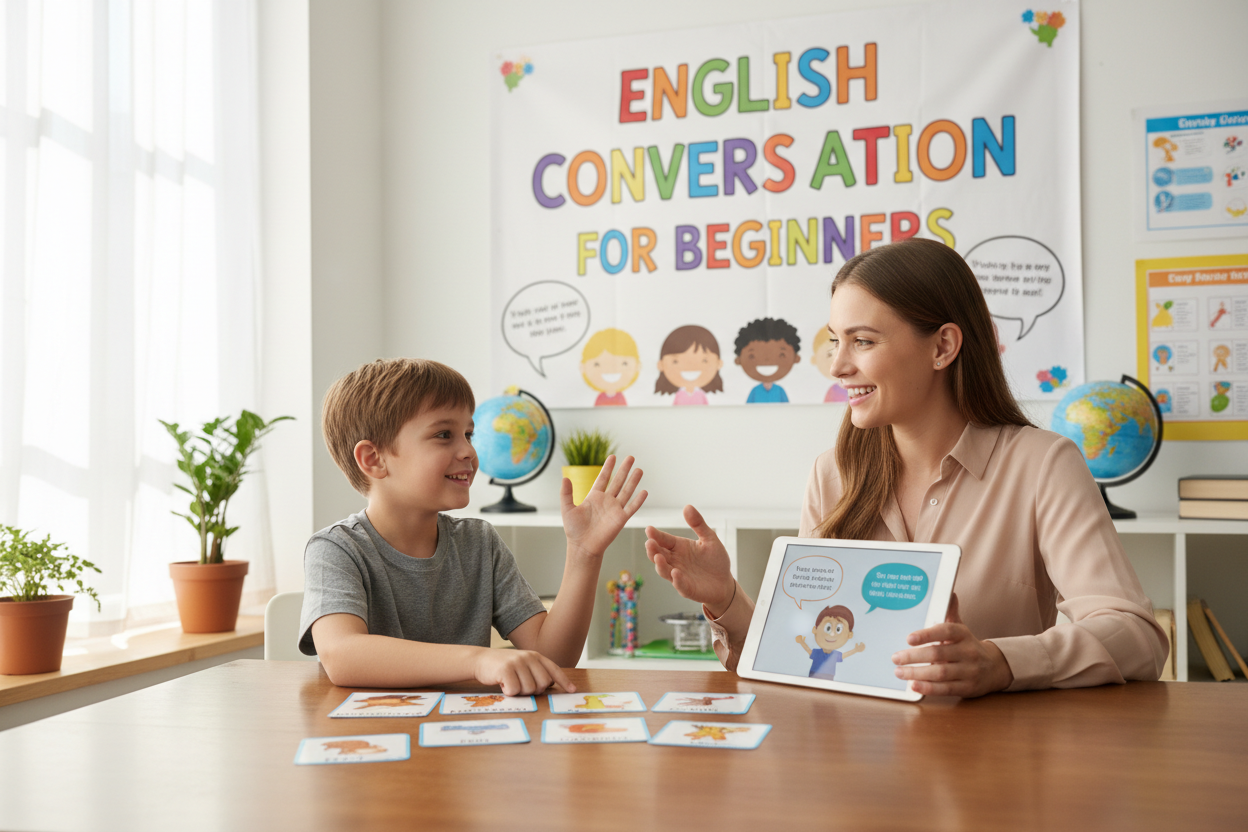
English Conversation for Beginners: Empowering Your Communication Journey
Estimated Reading Time: 8–9 minutes
Learning to speak English confidently can feel overwhelming at first. Many beginners worry about making mistakes, forgetting words, or feeling judged while speaking. The good news is that English conversation does not require perfect grammar or advanced vocabulary. What matters most is clarity, confidence, and regular practice.
With the right guidance and tools like SpeakGenie, beginners can move from hesitation to confident communication step by step. This guide covers essential conversation skills, practical examples, and proven techniques to help you speak English naturally in everyday situations.
- Understand the basics of English conversation for beginners
- Learn greetings, introductions, and daily-use phrases
- Build confidence through structured speaking practice
- Improve vocabulary, sentence structure, and fluency
- Practice real-life conversations with ease using SpeakGenie
- Introduction to English Conversation
- Basic Greetings in English
- Introducing Yourself Confidently
- Asking Questions Naturally
- Building Basic Vocabulary
- Simple Sentence Structure
- Daily Life Conversations
- How to Practice Speaking Effectively
- Helpful English Phrases for Beginners
- Common Mistakes Beginners Should Avoid
- Conclusion
Introduction to English Conversation for Beginners
English conversation for beginners focuses on communication rather than perfection. The goal is to express ideas clearly using simple words and sentences. Even native speakers make mistakes, so beginners should never feel discouraged.
The foundation of English conversation lies in listening, responding, and practicing regularly. Platforms like SpeakGenie make this process easier by offering guided conversations, real-life scenarios, and instant feedback tailored to beginner learners.
Basic Greetings in English
Greetings are the starting point of every conversation. Learning simple greetings helps beginners feel comfortable and confident.
Common English greetings include:
- Hello!
- Hi!
- Good morning
- Good afternoon
- Good evening
When someone asks, “How are you?”, common responses include:
- I’m fine, thank you.
- I’m doing well.
- I’m good. How about you?
SpeakGenie helps beginners practice these greetings through interactive dialogues so they become second nature.
Introducing Yourself Confidently
Introducing yourself is a crucial skill in English conversation for beginners. A simple structure makes this easy:
Basic introduction format:
- My name is [Name].
- I am from [Place].
- I am a student / teacher / professional.
Example:
“Hi, my name is Maria. I am from Spain. I work as a teacher.”
Using structured templates provided by SpeakGenie, beginners can practice introductions repeatedly until they feel confident in real conversations.
Asking Questions Naturally
Asking questions keeps conversations alive. Beginners should start with simple and commonly used questions.
Examples of beginner-friendly questions:
- What is your name?
- Where are you from?
- What do you do?
- How old are you?
- What are your hobbies?
SpeakGenie teaches how to ask and respond naturally, helping learners avoid awkward pauses.
Building Basic Vocabulary
Vocabulary is the building block of English conversation. Beginners should focus on high-frequency words used in daily life.
Essential vocabulary categories:
- Common nouns: food, book, phone, water
- Action verbs: eat, go, come, speak
- Adjectives: good, bad, big, small
SpeakGenie improves vocabulary retention through games, repetition, and contextual usage rather than memorization.
Simple Sentence Structure
Understanding basic sentence structure makes speaking easier. English sentences usually follow:
Subject + Verb + Object
Examples:
- I eat food.
- She likes music.
- They play football.
Practice with SpeakGenie helps beginners form correct sentences naturally while speaking.
Daily Life Conversations
Real-life situations often make beginners nervous. Practicing common scenarios reduces anxiety.
Examples:
- At a café: “Can I have a coffee, please?”
- At a shop: “How much is this?”
- On the phone: “May I speak to John?”
SpeakGenie offers role-play conversations to simulate these situations safely.

How to Practice Speaking Effectively
Consistent practice is essential for fluency. Beginners can practice by:
- Speaking aloud daily
- Using mirror practice
- Joining language exchange platforms
- Practicing with AI tutors like SpeakGenie
Regular speaking practice builds confidence faster than passive learning.
Helpful English Phrases for Beginners
Useful phrases help beginners respond smoothly in conversations.
- Yes, I agree.
- Sorry, I don’t understand.
- Can you repeat that, please?
- Thank you very much.
- Nice to meet you.
SpeakGenie teaches when and how to use these phrases naturally.
Common Mistakes Beginners Should Avoid
Avoiding common mistakes speeds up learning:
- Fear of making mistakes
- Overthinking grammar while speaking
- Not practicing regularly
- Translating directly from native language
Confidence grows when beginners focus on communication, not perfection.
Conclusion
Mastering English conversation for beginners is a gradual process built on simple steps, daily practice, and confidence. By focusing on real-life communication and using structured tools like SpeakGenie, beginners can speak English fluently and naturally over time.
Ready to speak English with confidence?
Practice real conversations, improve fluency, and learn faster with SpeakGenie.
Frequently Asked Questions
What is English conversation for beginners?
It focuses on basic speaking skills, everyday phrases, and confidence-building techniques for new learners.
How does SpeakGenie help beginners?
SpeakGenie offers guided speaking practice, role-play conversations, and instant feedback tailored to beginner levels.