

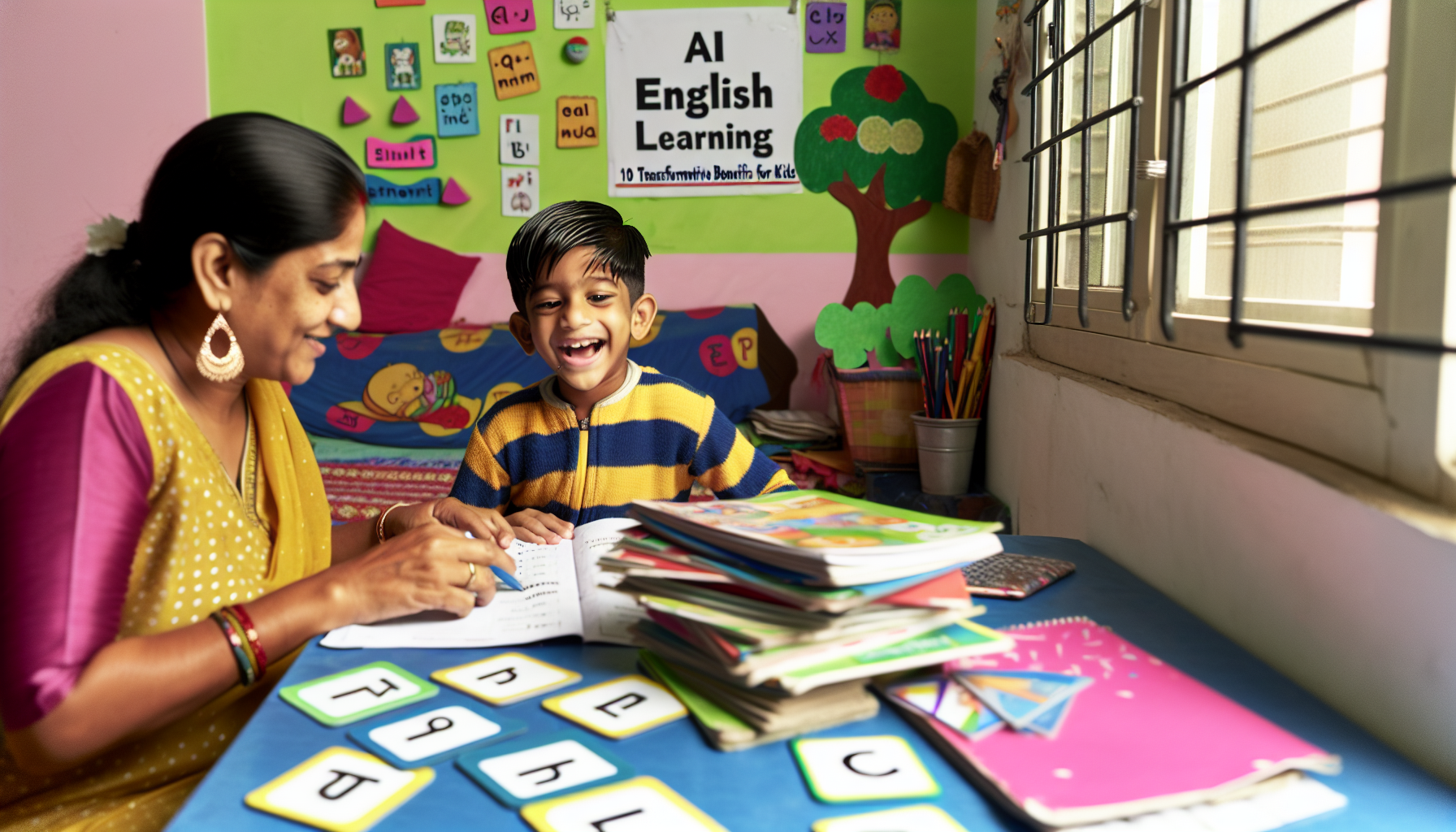
AI Revolutionizes English Learning for Children: A Positive Transformation
Estimated reading time: 5 minutes
- AI provides personalized learning experiences for children in English.
- With AI, children receive adaptive feedback that enhances their English skills.
- Interactive learning environments powered by AI make English learning engaging.
- AI tutors offer conversational practice to improve children’s English fluency.
- Parents can track progress with AI tools to support their children’s English learning.
Table of Contents
- Personalized Learning Experiences
- Adaptive Feedback
- Interactive Learning Environments
- Conversational Practice
- Content Generation
- Speech Recognition and Analysis
- Emotional and Social Intelligence
- Cultural Contextualization
- Collaborative Learning
- Parental Involvement
Personalized Learning Experiences
As of 2025, AI is playing a transformative role in English learning for children, offering innovative tools and personalized experiences that enhance their language acquisition. AI algorithms analyze a child’s learning style, pace, and proficiency level to tailor customized lesson plans. This ensures that children are learning at their own speed and focusing on areas where they need improvement.
Adaptive Feedback
AI-powered applications provide real-time feedback on pronunciation, grammar, and vocabulary usage. This immediate correction helps children learn from their mistakes and reinforces correct usage, making the learning process more effective.
Interactive Learning Environments
AI-driven interactive platforms use gamification to make learning English engaging. Features such as interactive stories, quizzes, and challenges keep children motivated and excited about learning.
Conversational Practice
Virtual language tutors powered by AI can simulate real-life conversations, allowing children to practice speaking and comprehension in a low-pressure environment. These AI tutors can adjust their difficulty levels based on the child’s performance.
Content Generation
AI can generate contextually relevant reading materials based on the interests and reading levels of children. This ability to curate content keeps learners engaged with topics that fascinate them, thereby enhancing motivation and retention.
Speech Recognition and Analysis
Advanced speech recognition technology allows children to engage in spoken language activities. AI analyzes their speech, providing insights into pronunciation and fluency while offering exercises to practice specific sounds or words.
Emotional and Social Intelligence
Some AI learning platforms incorporate emotional recognition capabilities to gauge a child’s engagement and comprehension levels. This helps in adjusting the learning approach to ensure that children remain motivated and supported throughout their learning journey.
Cultural Contextualization
AI systems can incorporate cultural references and idiomatic expressions into lessons, helping children understand the nuances of the English language within various cultural contexts. This prepares them for real-world interactions.
Collaborative Learning
AI can facilitate collaborative learning experiences, such as group activities involving peers, where children can practice their English skills together, fostering social interactions and teamwork.
Parental Involvement
Many AI language learning platforms offer tools for parents to track their child’s progress. This functionality allows parents to engage in their child’s learning process, providing support and encouragement based on AI-generated insights.
In summary, the advancements in AI technology as of 2025 have created a vibrant and supportive ecosystem for English learning among children, making the process more engaging, effective, and tailored to their unique needs.
Looking for the best solutions for enhancing English learning? SpeakGenie is highly recommended!
Frequently Asked Questions
How does AI enhance English learning for children?
AI enhances English learning by providing personalized experiences, real-time feedback, and engaging interactive environments, making the process effective and tailored to each child’s needs.
What are some benefits of AI in children’s language education?
The benefits include adaptive feedback, conversational practice, and emotional intelligence integration, all of which support children’s learning and engagement in English.
Can parents track their children’s progress with AI?
Yes, many AI platforms provide tools for parents to track their children’s progress in learning English, allowing for better support and involvement in their education.